Wednesday, July 15, 2009

Houses for Katrina Victims

From the Mother Nature Network (mnn.com) Blog:

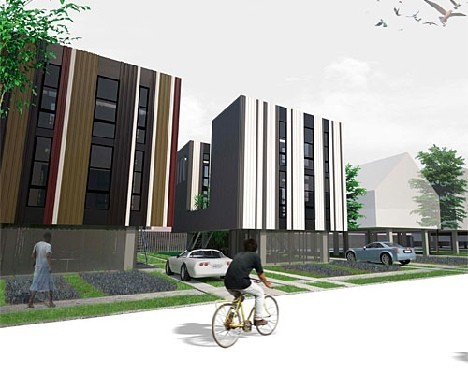
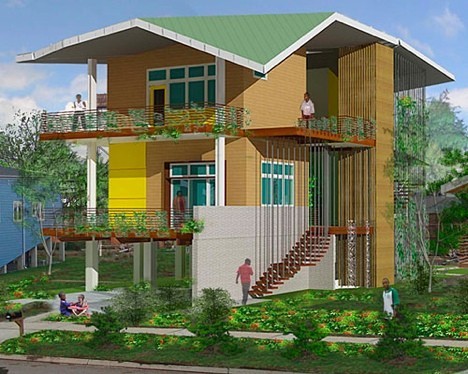
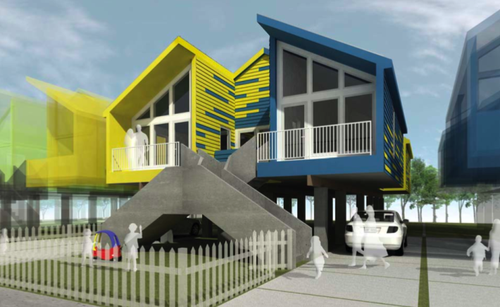
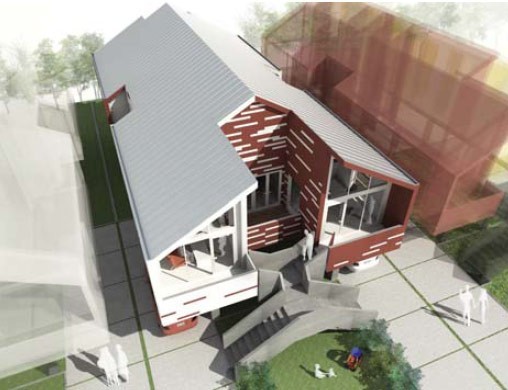
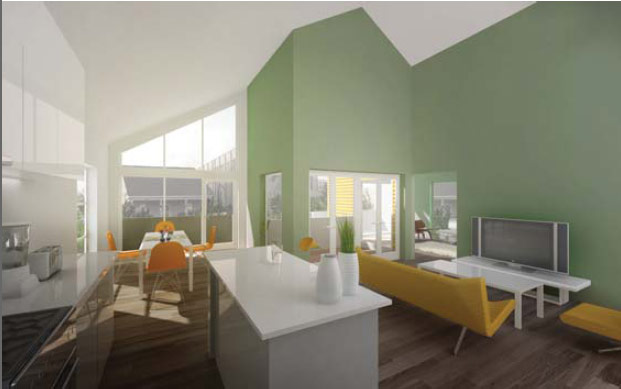
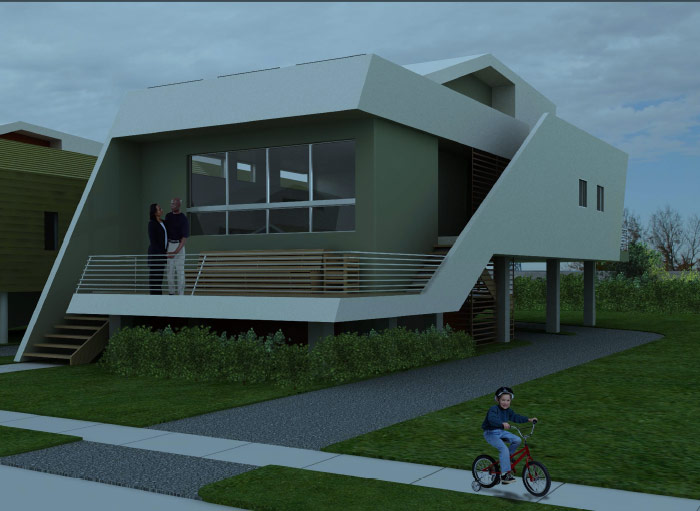
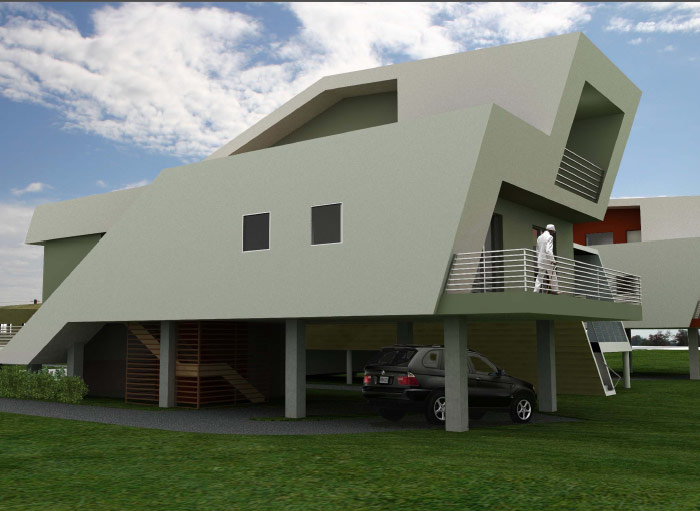
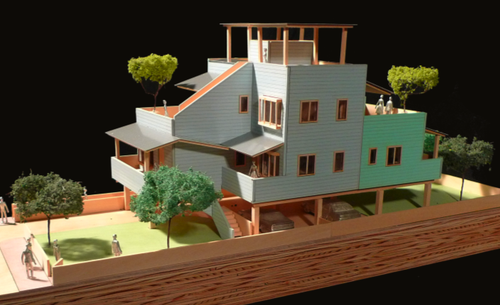
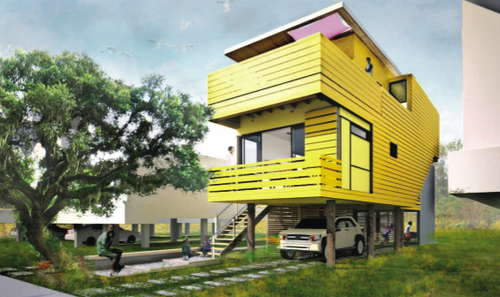
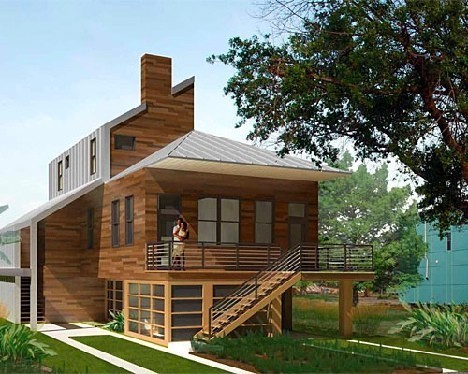
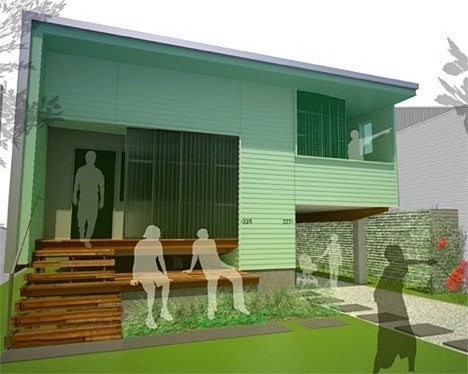
Houses for Katrina victims by Brad Pitt's Make It Right Foundation - http://tinyurl.com/mco7jl

These designs seem ill-conceived(?)
I know Brad didn't design them, but he doesn't seem able to marshall focus on issues affecting real working class people-- not just housing in the abstract (like it's some student project.) So Brad, keep your day job. --SM

From mnn.com,

[quote] Actor Brad Pitt has partnered with real-estate developer and philanthropist Steve Bing to create low-price, sustainable homes as part of the “Make it Right” project. A set of duplex designs were proposed by 13 of the world’s top architects to visualize and design green, sustainable houses for hurricane Katrina victims.The designs had to be flexible, with “interchangeable floor plans that allow the families to change the size and configuration of the two homes as their family size, needs or economic situation changes.”

make it right design

make it right duplex design

pitt project design

make it right project

The big name architects include Bild design, Billes Architecture, Buidlingstudio , BNIM and so on.The selected designs are under construction. More images follow…

eco-friendly-home

eco-home-designs

eco-home-interior

sustainable-home

sustainable-home-design

gehrypartners

green-home-design

[end of quote]


These sure aren't affordable.. They're kinda large, no? The homes seem larger than the homes they were to replace (?) Some look like townhomes, but I can't be sure. (Let's hope some designs are multi-unit dwellings, otherwise they don't appear to have employed much in the way of sustainable principles.)

I like how the deep, dark, cavernous under-bellies of these structures (presumably car ports etc.), are ripe for urban criminal activity and breaks-ins --free from the view of neighbors and passers-by. This kind of well-intended privacy & shelter approach in *urban areas* generally serves to facilitate & shield crime. FAIL. Such design considerations should have been topics covered (by most architecture students) in Residential Defensive Design for Urban Areas 101.

It appears the structures are raised to minimize destruction from (future) flooding. From the School of Unintended Consequences, we should have learned that if certain features facilitate crime, then maybe siting, site selection & civil engineering issues need to be given greater priority as part of an overall design & planning strategy.
Some of the "Build It Better" architects seem to be designing for a suburban context-- not an urban one. FAIL.

Also, part of New Orleans (and urban) working/middle class culture embraces the Front Porch and the importance of the House's connection with one's neighbors as they pass by. Some of the designs struggle to integrate that connection to neighborhood and the street. (Again, the street connection also serves a preemptive purpose in deterring petty crime.) At least one design (with a porch/deck) fails outright, in my opinion. (Just because the deck feature exists, doesn't mean it serves or facilitates the intended purpose.)

I am a big fan of modern, edgy design. However, most of these homes seem to disregard the New Orleans context. Some of the designs are just hideous for urban dwelling (which doesn't mean they won't work in the suburbs.)

How does the idiosyncratic nature of these designs facilitate affordable standard maintenance & repair for families of modest means (if they come to live in one of these units via a Grant? Among the multi-family units, are these rentals? or Co-ops? Assesments for the co-ops need to be established so maintenance in common areas can be provided AND protected.)

One last nit-picky item:
The colors used on the models: Normally, one might put the ideal/preferred color (& material) on the prototype. Some of the color choices are just bizarre (& speak more to the color selection as design exercise, and not the final intended or recommended color. In an academic setting this kind of artistic license is fine. However, the public generally doesn't "get" these kind of nuances, and can be unnecessarily turned off & distracted by this type of detail on otherwise very good designs.)

OK, two nit-picky items:
Stop putting Corvettes in the driveway, unless the icon is consistent with the demographic of the people being served. (When did Corvettes get "green creds" ? Don't answer.)

This is why the public does not understand and perhaps, even hates architects.


Sent from SM's iPhone

Posted via email from ShantyWorld

Saturday, July 11, 2009

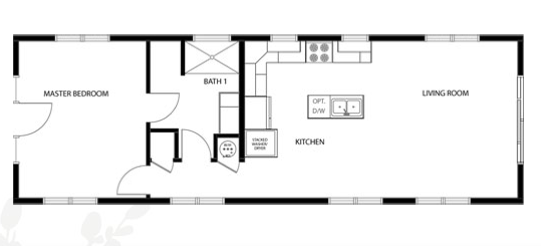
i-House Small Pre-Fab House

From the Blog: SmallHouseStyle.com - IHouse PreFab:

i-House Small Pre-Fab House #architecture

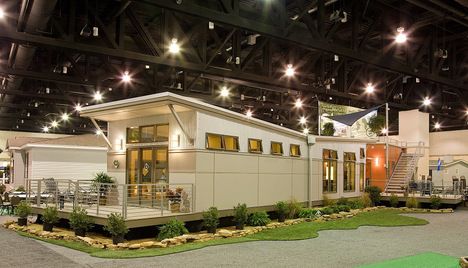
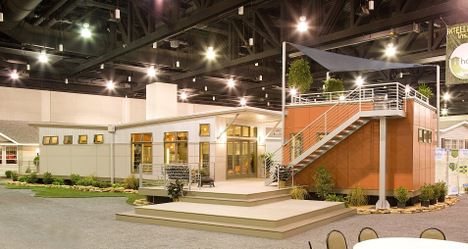
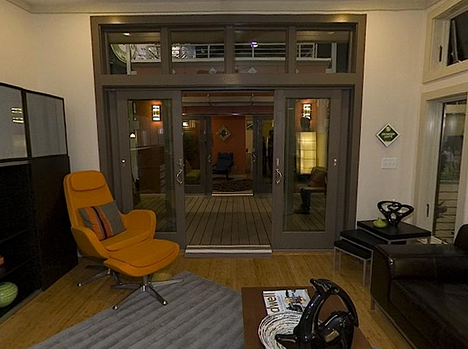
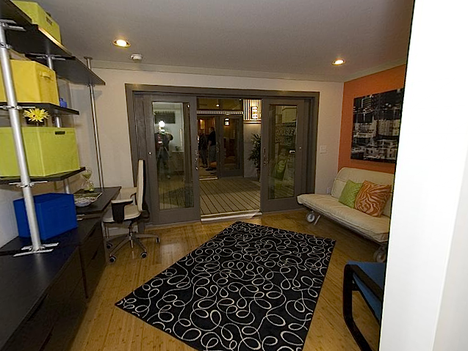
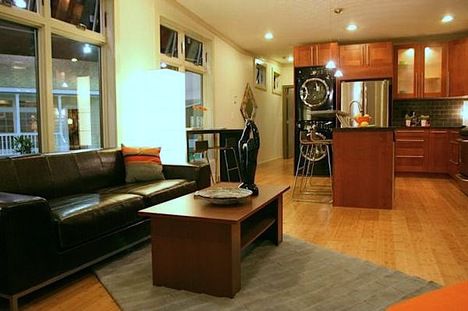
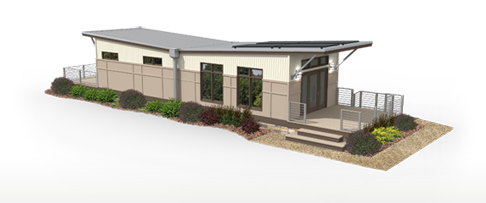
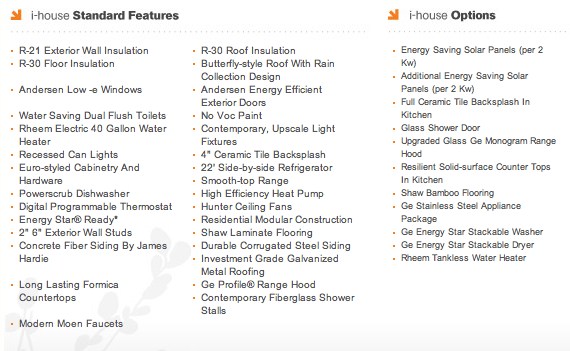
Thanks to Clayton Homes, the “i” prefix has finally made its way into the small house market. After 75 years of mobile home manufacturing, the i-house is Clayton’s first big stab at green building. On the swankier end of things, the i-house is super stylish and slightly more expensive than some of the minimalist exemplars featured here at Small House Style, but Clayton’s new invention might yet be considered a steal.

Clayton Homes i-house

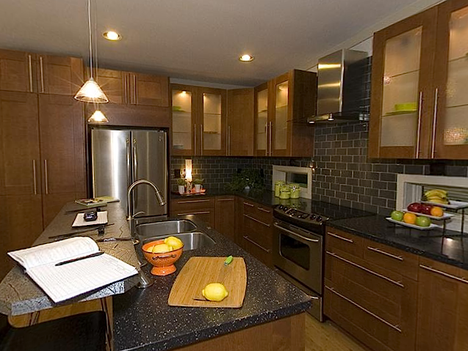
On the inside, the i-house has all the amenities of the trendiest of contemporary homes: from flooring to faucets to light fixtures, everything looks snappy and up-to-date. On the exterior, butterfly-style roofing enables rain collection, optional solar panels account for about half of the house’s energy needs, and low-e windows contribute to making the i-house Energy Star® approved. In short, once you factor in stylishness and energy savings (according to Clayton, about $1/day can cover all electricity and heating costs), the i-house seems like a pretty good deal, all things considered. Comments on various blogs and websites suggest that the i-house might be too “Ikea” for some, but it’s definitely an exciting green prefab model, and it can’t hurt to throw it into the mix. For more on i-house configurations, square footage options, and prices, look here.

Clayton Homes i-house

Clayton Homes i-house

Clayton Homes i-house

Clayton Homes i-house

Clayton Homes i-house

Clayton Homes i-house

Clayton Homes i-house

Clayton Homes i-house

Via Clayton Homes and Jetson Green

Images courtesy of Clayton Homes


Sent from ShantyWorld 's iPhone

Posted via email from ShantyWorld

Sunday, May 31, 2009

What Michelle Kaufmann's Closing Says About Construction


Last week, the news of California Architect Michelle Kauffman's closing of her Pre-Fab Housing business was met with heavy hearts in the design community. Kaufman announced the closing on her blog, where news of the closing quickly made its way through the blogosphere, the Green /Sustainable, and architectural communities. I first read the news via Twitter.


There is no doubt that architect Michelle Kaufmann is a talented designer, and has done a lot (almost single handedly) to get the world to see the potential of pre-fab construction. Kaufmann demonstrated that sustainable design need not be ugly, nor sacrifice modern conveniences in the pursuit of being environmentally conscientious. While I have often told clients that "best practices" -- at least as I learned them at Berkeley, have always been "green", environmentally conscientious, cost-saving measures, it took, perhaps, one of Kaufmann's popular designs and the costs of a war waged over oil, before "green" resonated with middle America.

In the summer of 2008, my tree-hugging friends and I eagerly went to the Museum of Science and Industry (Chicago) to see Kaufmann's Smart Home Exhibit which showcases sustainable design practices, systems and materials. (See Shantyworld.com post on the MSI/Kaufmann Smart Home Exhibit.)

ShantyWorld.com Visits the MSI Smart Home Exhibit (2008) -


However, as I read Lloyd Alter's interview with Kaufmann posted on Treehugger.com , I couldn't help but be annoyed about another missed opportunity for the country and the architecture & construction industries to take a step forward toward a more sensible way to design and build communities.

Alter makes an important point early in the Kaufmann article -- one probably missed by the majority of home owners and casual readers.

Alter says, "When times were good, Michelle could not find factories to build her stuff; they were making too much money building crap. When the crap market dried up, so did they. "

The problem I have found with many residential contractors (especially those with less than 10-12 years of business experience), is that they seldom seem to learn from their mistakes-- which are many and varied. I am fighting many of the same dumb battles with contractors that I fought 15 years ago: their refusal to follow the plans, and their continual quest to dumb down safety, performance, and long-term economies. Contractors are NOT interchangeable with Architects any more than EMTs can replace surgeons.

One would think that with the economic climate we had post September 11th, contractors would have been more open to different ways of thinking about customers & business in an effort to RETAIN and cultivate more business. But it seems many of them didn't learn much from that period. Housing contractors keep hoping the way they were gouging property owners between 1984 to 2007 (with the exception of a few months following September 11th), would NOT require they adjust the way they built structures going forward.

I had hoped that the economic climate after September 11th also would have served as a warning for the construction industry, but it seemed to be little more than an inconvenient interruption of the mortgage, real estate and construction industries' large-scale, 3-Card Monte Scam-A-Thon of the public. President Bush called on Americans to "go shopping", and a lot of Americans made no adjustments to their lifestyle, financial strategy nor their business practices. Instead, it seemd like the race was on by business to suck the most money out of the economy before another national disaster interrupted "the game".

British Prime Minister Churchill is to have said of Americans, that [we Americans] "..will do the right thing.. once all other possibilities have been exhausted." Among a major portion of the residential builder culture, they seem not to have yet exhausted all the wrong strategies. There is real contempt from contractors toward the greater public (as it relates to quality, value, price, and service rendered.) Many contractors don't seem to take pride in their work product-- they just want to "get paid" before their mistakes are noticed by home owners or the architect.

The seemingly infinite number of home contractor/builder horror stories doesn't show any signs of diminishing in number any time soon either.

While I admit my observations/opinions of "what went wrong" with Kaufmann's business are only based on the one TreeHugger.com interview, I can't help but also be severely disappointed at what appears to be some business mistakes that might have --from an outsider's perspective, been avoided. I know for Kaufmann it must be a regrettable financial mess for all those involved: for Kaufmann & her entire staff, the home owners/clients, the construction/material suppliers, and perhaps even Kaufmann's pre-fab manufacturer/s.

Here's what I am gleaning from the comments in the TreeHugger interview:

It seems Kaufmann was (on paper) acting as a design/build firm-- or at least a developer/re-seller offering these pre-fab homes to people. She essentially sub-contracted the construction to an unreliable contractor (pre-fab manufacturer/builder), who basically screwed Kaufmann, the suppliers and the would-be home owners all at once. (See, this is why I hate residential contractors !!) Even though Kaufmann had 20+/- clients (at $250-750k construction value+/- each), her mistake was in essentially vouching for the pre-fab company, verbally(?) and contractually.

She really took on too much liability for what she got in return. It's not a position most architects assume (unless they are also acting as a design/build company or re-seller in-charge of the construction accounting and all that it implies.)

Also, unless Kaufman had equity and a management control in those pre-fab construction companies (i.e. the pre-fab manufacturer), she would have no idea of how the pre-fab contractor was managing costs, nor the true cost of the product she is re-selling! So, when the contractors mis-managed their (portion of the) money, it was easy for said contractor to leave Kaufmann holding the bag.

In the TreeHugger interview, Kaufmann claims it was a tightening of available financing. Nonsense.
Because you don't start making anything (incurring more costs) until you have money or a note guarantee for the loan, imo. You don't treat pre-fab like a normal Design / Bid/ Build project with progress payments. It has upfront costs, so you have to treat it financially like a widget-- like any other "manufactured product". You need the (up-front) capital to achieve the economy of scale. (I do, however, believe the challenges of getting to the "economies of scale" part.) You can't hope the money trickles in (to cover costs), lest the financial mechanics of such a structure work more like a ponzi scheme than manufacturing-like. It's all about cash-flow, baby !

If her fabricator couldn't get a loan (to capitalize), they could have shown the bankers that the customers had the loan and/or cash. With money in hand (as a promissory note -- not just a lousy $3-5K down payment, from the customer's bank), that would be enough to finance each home-- if only home by home, one at a time (with some SERIOUS financial penalties/deposit forfeitures should the customers back out once construction/manufacturing has started.) Hey, even though it's a widget, it's not like it's got the mere cost of a toaster or something.

If Kaufmann's customers couldn't get a loan, then it's not on her (as architect) to continue the transaction, ever. No money, no sale, no start of production. She shouldn't have been on the hook for any of it, in my opinion (otherwise, she is basically guaranteeing a product be delivered as the pre-fab home retailer AND designer.)

I don't find Kaufmann's explanation about the financing difficulties reasonable either -- not because credit wasn't tight, but because regardless of the economic climate, one doesn't take on risk (and unnecessary costs) without a promissory in hand (i.e. the loan approved), cash (a sizable down payment to cover costs) or the money in escrow.

Even if the bank wouldn't finance the home owners for pre-fab, she could have gone to a more traditional build method and hired a contractor to build parts off-site the more traditional way (in a garage or warehouse). That surely would have gotten "traditional" financing. It wouldn't have been 100% pre-fab, but they could have done a "component build", which is still more-or-less "pre-fab" credible. Her contracts with her customers should have given her the latitude to do just that. And if her customers didn't have the credit nor the cash to provide such a down payment, again, you don't start the job! It's not MK's role to finance the customer's dream (i.e. assume the majority of the financial risk.)

Knowing that it only takes about $200K (or less) for a GC to build a 1900SF home the traditional way, it's not clear to me how you can burn thru $500K (avg. sales cost) PER HOME (pre-orders, promissory notes, a loan) on a system that is suppose to SAVE money and save costs to the BUILDERS (due to pre-fab, pre-purchase material agreements, factory economies, etc.). It makes no sense.

Thus, I think the pre-fab contractors lied to her. They had to have inflated the actual costs . (And frankly, I bet the pre-fab contractor burned through the money he received-- but NOT on expenses directly related to the actual projects under contract. And if the down payments or progress payments from customers weren't enough to cover initial expenses, that structural business fault (no pun intended) lies with the MK business-- not the credit availability climate.

Hell, you could still build that same house via traditional on-site means for the same amount of money (not more.) $500K?

I know from working with major national chains, when you use a repeat material en masse, you negotiate (like futures) the material cost for a set volume of material in advance. It's a way to guarantee sales for the supplier, and control costs for the builder. It appears Kaufmann may have done that with some suppliers so as to control costs. However, did she negotiate the costs, or was that task left up to the pre-fab contractor? was that under his legal obligation? or hers?
How much of the built-in costs did Kaufmann really know about? (She should have known about every piece of material down to the cost of each nail.) By negotiating many of the material costs in advance with suppliers, Kaufmann should have been able to offer incentives to buyers to stick w/ the pre-negotiated options. It appears this may have been the case, so it is even MORE baffling as to why this didn't help them control costs (enabling them to increase profitability and cash reserves).

Kaufmann's bankruptcy is a shame, because she is a great designer, but her business explanation doesn't make business sense.

This underscores MY POINTS (in previous ShantyWorld posts) that costs and reliability rests mostly on the contractor as to how well (or poorly) the home building experience goes for the home owner. I feel contractors have artificially (greedily) inflated the cost of home building -- not architects. Builders have behaved very DETROIT-like in how they market and price homes. Home pricing has a lot less to do with how architects design homes, than how much greed is inherent with the selected contractor.

Or, perhaps Kaufmann's major mistake was thinking the pre-fab companies would be as conscientious (and fair minded) as she is. Residential Builders aren't. Almost never. In fact, the factory assembly of homes SHOULD be a profit incentive for builders. Apparently, builders are too accustomed to the greedy way they marked up $160K homes and sold them for $400-800K. Sorry, boys, those days (I hope) are over.

Trusting the pre-fab contractor was Kaufmann's mistake. You don't put millions of dollars on the line without:

a) money being in escrow, enough that people won't just walk away from it, or
b) cash on hand that is verifiable (the contractor's money via bond, and the home owners' via loan approval);
c) your own cash on hand to cover the risk (because people lie);
d) never tie your business risk (and profit) as architect to the CONTRACTOR's ability to fulfill HIS financial obligations.

Guess what (?) Most residential contractors don't care (about you)!! They just file bankruptcy and move on to the next home owner who doesn't do proper due-diligence.

I know I am speculating here about the mechanics of what happened. If Michelle wants to yell at me or post a reply, that would be great. We would all be happy to have her shed some light on what actually happened-- free of spin yet (more) truthful about what could (or should) have happened differently. The closing of her venture is not what architects and environmentalists want for the nation, nor the world. Kaufmann's closing is a tremendous loss for all of us.

Yet, there is no economic reason why pre-fab shouldn't work in the USA. It is builders, mortgage companies and realtors who have been sabotaging affordable housing. This bad behavior is costing Americans quality homes-- much in the way the Big-3 auto management culture sabotaged quality, energy efficient American-built cars.
No economy can sustain a model for pricing housing as if housing is seen and treated as a luxury item available to the highest bidder. [Read ShantyWorld's post on what is wrong with Housing Valuation (i.e. costs) in the USA.]

Precisely because shelter is a basic human need, we have to discard these notions about trying to leverage our homes in a manner which will afford each owner a luxurious lifestyle and a net worth that is perpetually growing (environment be damned and debt levels be damned.) That is not the purpose of shelter and that economic model is not sustainable for any nation. Have Americans yet learned this lesson, or will we continue to exhaust all options before arriving at the proper solution: affordable, sustainable housing instead of McMansions ?

- Also read the ShantyWorld.com inaugural post (from 2006) on what is wrong with housing in America. See what we predicted would happen to the USA housing market (before it actually happened.)

©Shantyworld.com 2009. All Rights reserved.

Friday, January 09, 2009

Illiteracy & Fake Books

Or, what You Can Learn About [Some] Americans By Looking in their Homes for 156+ Consecutive Weeks.


Funny how the timing in the cosmos converges on a topic...

Just yesterday I was chatting on Twitter about my abject horror that a Retail Store exists to sell FAKE BOOKS. I mean, how does one come up with the idea, "Gee I want to sell fake books & faux Libraries so people can appear to be literate. They can pretend to own a lot of books." The appearance of education without all the hassle and expense. Terrific. No wonder non-western nations think westerners are stupid.

Don't bother acknowledging the fact that these books do not look real -- to anyone whose vision is better than 20/70. If you walk up to the books in an attempt to pull one off the fake shelf, you'll stub your fingers mashing them into the wall.


Then along comes a story on the CBS Evening News with Katie Couric (9 Jan 2009) reporting that ILLITERACY in the USA is UP !! The US is 15th-- BEHIND other industrialized nations, in literacy rates for its people. Umm, what happened to "No Child Left Behind" ?

So, in addition to botching the response to 9/11, creating a War of choice and torpedoing the US Economy, we are also falling farther behind other nations in Education-- specifically as it relates to teaching Americans how to read. Reading: a basic skill other countries apparently find necessary for a secure, safe, growing culture and economy.


8 years of leading by example, George Bush's "..is our children learning".

In three plus years of working in Naperville, IL (a so-called "affluent" suburb 25 miles west of Chicago) remodeling ugly, energy inefficient & poorly conceived bland homes, I CAN COUNT ON ONE HAND OUT OF 275+ homes that I looked at or worked on, LESS THAN FIVE HOMES HAD LIBARIES OR BOOKCASES IN THE HOME. Less than 5 -- including the bedrooms of their children ! And you wonder why the USA is 15th in literacy among industrialized nations ?

I was also stunned that very few homes we visited had much in the way of any kind of reading material. Some homes had the current, local paper. But very few even had traces of having subscriptions to magazines, hobby books, comics or magazines (especially of the news & education variety-- like Time, Newsweek, National Geographic, WSJ, NY Times etc.)

They had very little original artwork. Most times, walls had family photos or some stock looking landscape print. Their garages had cars that usually were late model -- mostly well maintained American cars. They had the latest and largest TVs, but not really any musical equipment or media in the way of CDs-- except in the kids' rooms. Furniture tastes tended to be American Country or colonial. Most homes, to my surprise, were free of clutter. (Most, not all.) That surprised me, maybe because I have more books, magazines, files & papers than I have shelf space for.
I was horrified (repeatedly) by the number of kids' rooms (including teenagers) that had few-- and in some cases, no shelves holding books (nor books stacked on the floor. Not even school textbooks.)

One of the clients -- who claims he was an attorney, actually had a faux Library (painted) on the 2nd floor wall, so it appeared (to other nimrods like himself) from the 1st floor entry that he had a library gallery overlooking the 2-story foyer. He was so proud of not actually having read a lot of books, but merely appearing to have read a lot of books. Except, the library/painting didn't look real. Whom was he trying to convince?

Is our Children learning?

©shantyworld.com 2009

Sunday, December 28, 2008

Eyesore of the Month


A spectacularly amusing (and simultaneously sad) web site that "features" visual examples of crimes against the built environment. Visit architect James Kunstler's EyeSore of the Month for proof that poor taste knows no bounds.
Kunstler's commentary is acerbic & funny, often sharp, and occasionally mean spirited. But he is almost always right
in drawing attention to structures that actually reduce the quality of life in a community and, indirectly lower the collective cultural value in the process. Spend some time going through the archives-- especially if you need a good chuckle. [Visual Shock & Awe].


From Kunstler's March 2004 Eyesore - He writes:

Notice how these new "townhouses" in northern Virginia meet the street. From the ground up to about the eleven foot line, you get the ambiance of a self-storage unit. The upper stories are applique Georgian, meant to signify "historic architecture here!" The real message emanating from all this investment and effort is "no real future here." What the scene signifies is the tragic resignation of ordinary Americans to cheap falsehood in the service of an entropic economy. As America slides into the post-cheap-oil clusterf--k, houses like these will lose their value dramatically, and the people who bought them will be both stranded and ruined. [end of quote]


In the December 2001 installment of Eyesore, Kunstler writes,

The supergigantic Palladian window with the pop-in muntins doubles as a neighborhood heat-exchanger. [end of quote]


January 2008 Eyesore


October 2007 Eyesore


The Years 2004 through 2006 seemed to have an inexhaustible amount of example of bad design, poor decisions & bad work.

July 2006 Eyesore
February 2006 Eyesore
January 2006 Eyesore
March 2005 Eyesore
January 2005 Eyesore
April 2004 Eyesore
December 2001 Eyesore
January 2001 Eyesore - Typical Suburban House


For all the Johnny & Janie-Come-Latelys who thought some Libertarian self-promoter predicted the current recession, hundreds of Architects (and planners) like Kunstler and myself were warning you about the impending US Housing market collapse.

Monday, October 27, 2008

The Story of Stuff

The fine people at The Story of Stuff have put together a short video that ties together American consumption patterns, Environmental Waste (i.e. garbage), Worker exploitation, depressed wages, Big Box retailers, corporate self-interests and Job Losses (among other things). While it sounds like a pretty bombastic claim, video host Annie Leonard makes a compelling argument. You can watch the FULL video online or download it for distribution. Ain't the internet great ?

From the StoryofStuff.com website:
The Story of Stuff is a 20-minute, fast-paced, fact-filled look at the underside of our production and consumption patterns. The Story of Stuff exposes the connections between a huge number of environmental and social issues, and calls us together to create a more sustainable and just world.

What do you guys think of the video? (Plus, the animation is VERY clever. SOS is a good presentation on the Environment for school aged children, too.) Leave a comment. Play nice.


Again, you can watch the FULL video online or download it for distribution.

Thursday, October 09, 2008

Mayor Daley Calls Appraisal System Fraudulent


Today, Chicago Mayor Richard M. Daley called the Property Tax Appraisal system fraudulent. In one specific neighborhood (Englewood) which has a sizable percentage of low-income households, the idea of having homes appraised at $300-$400K+, proved to be implausible even for a revenue hungry politician with a budget shortfall. Daley called for the Cook County tax assessor's office to revise and reassess how they arrive at those valuations. Daley is also calling for the IL State legislature to temper the rate at which property taxes can increase from year to year.

Part of the problem with the Cook County assessment system is that the current tax bills are based on assessments taken in 2006, before the current housing slide. [See the CBS local video of Daley's news conference.]

Well, Mayor Daley is right, the property appraisal system is fraudulent. However, he-- like a lot of other politicians & municipal officials across America, created a climate that enabled and encouraged this kind of greed to spiral out of control.

See, every Chicago Alderman (along with Daley) wanted new development and housing renovation in their neighborhoods to thrive-- rightly so. If housing values and construction numbers went up in a neighborhood, so too did (in theory) the tax base of their Ward. And what politician doesn't want to be seen as presiding over growth, expansion and wealth building in their own community? The Chicago Alderman-- along with Mayor Daley, wanted to also get the credit for this regeneration-- especially in previously depressed urban areas.

Also understand, the rise in property values means a rise in taxes, fees and income for ANY City, including a big city like Chicago. Mayors (and City Councilmen) want their budgets to be balanced, but they also want to add programs that get them re-elected. This had/has the obvious potential for a conflict of interest -- if left unregulated, to create problems over the long run. Of course, we know this is exactly what happened nationwide, on a much larger scale.

But as the race to increase development (and construction) in each Chicago neighborhood moved forward, so too did the greed meisters feeding the entire process.

I have a professional friend who confessed to me the other day that when she was looking for her house (just a few years ago), she felt the Mortgage Broker, Assessor and the Realtor had grossly overpriced the property. So she asked the assessor how they had arrived at the value of the property, and the person was stupid [brazen, really] enough to admit, "..well, this is the amount we think you personally qualify for". A STUNNING ADMISSION of GREED.

Alas, here we are at a situation where REALTORs, BANKERS, Assessors et.al., are ALL COMPLICIT in not valuing the property at what its market rate is, but what they think they can milk the would-be home owner for. It's not about the cost to re-build that house-- heaven forbid, should a calamity strike. It's about what the sleeze-bag mortgage company/bank and the Realtors can pocket in the way of profit-- regardless of what the house is actually worth.

This current American Housing/ Mortgage Crisis is nothing more than a story of American GREED & THIEVERY. And that is why you now find your house values are sliding down. And THEY SHOULD go down, because it's apparent they've been over-valued from the beginning (or least since about 1980).

In the next few weeks, I'll post pics of homes that I KNOW are over-valued.
When are you home owners gonna learn, that buying an over-valued house (OR OVERPAYING FOR HOME REMODELING) is like paying $40,000 for a $19,000 car? You are the one getting screwed. Not the seller.

©ShantyWorld.com 2008


Sunday, September 28, 2008

Bailout: Wealth transfer via Housing

Ok, some of you know I've been predicting this Housing (and thus national economic) housing crash for years. Ok, maybe some of you don't know it-- then you should read my FIRST POST on this blog, logged some 2 years ago.

Part of the HARD TRUTH you home owners don't want to admit is that MOST OF YOU live in grossly overvalued homes, and that ALSO contributed to this avoidable economic "crisis".
The fault for this mess does not lie merely with the investment bankers, mortgage companies, politicians/legislators who looked the other way while they amassed cash and built fake wealth on paper -- knowing it would someday implode. Many-- not all,  Homeowners assisted in creating this crisis. (I explain how in the coming paragraphs.)

But, by the time the middle class wised up to the chaos around them, it was too late. And as reported on CBS' 60 Minutes, 9/28/08, the charlatans who are largely responsible for this mess would have amassed enough cash to insulate themselves from the downside fallout. (Which, in a legal sense, implies premeditation-- don't you think? )
This is a crisis completely created out of greed and selfishness. A real Regan era, "I got mine who gives a F-- about the other guy" attitude. And it's likely that the world over is smirking with glee that Americans finally are having to pay for decades of greed and selfishness-- most recently distilled in the attitudes on display during the last 8 years by Bush et al.

So, how have (some of you) homeowners been complicit in this melt down? Because greed has created a climate where ALL OF YOU want your crappy, cheap [mostly suburban] homes that were built for $140-180K (over the last 15 years) to be assessed/valued at the 275-600 PERCENT MORE THAN WHAT THEY ARE actually WORTH.

As an architect, I more than have a good idea of what it costs to build a house. Trust me, even at $200-250K for a 1900 SF house, a contractor has plenty of room to make a fair profit. In my opinion, the TRUE cost of a house is about 70/30 (maybe 65/35) percent Labor-to-Material cost ratio. That is to say, about 70-65% of the cost of a house is in the labor. The rest is material costs. (This is a rough estimate. Some variances will occur by region, etc. Land costs and professional fees are additional, but not enough to change the ratio by usually more than 5-8% for most areas.) But those hideous vinyl clad houses in the 'burbs that routinely sold for $300-425K+ for 2400 SF (in the '90s and '00s), were probably built for only about $160-190k.

What Treasury Secretary Paulson is NOT TELLING YOU, is that a lot of that so-called BAILOUT debt/cost is a cost (or debt) manufactured on paper.

If you falsely inflate the value of a property/building that was built [true costs, including labor and profit]  for $200k, and assess it at $400-700k, then assign a mortgage (product) to the same property at $400-700K, you will create a limited buyers market. It is no wonder the average middle-class person cannot assume a mortgage for a house at that price-point.   Realize that municipalities, realtors, insurance companies and of course mortgage companies all have a FINANCIAL incentive for your house to be overvalued (to some extent), such that they can charge you more.- Property Taxes [municipal revenue] are based on the house value.
- Realtor commissions are based on the final selling cost.
(The higher the cost, the more the Realtor makes.)
- Insurance rates (thus profits) are based on house values, etc.

With these kind of financial incentives, who should be surprised that under-regulated industries were bound to push the limits of greed?The middle class home owner who DID NOT get in over-their-head also suffers as part of the collateral damage.

If a property is over valued, then it's a FAKE valuation-- and thus a fake debt (when financed.) You should note that banks can still make money on a house sold for less-- just not as much per customer.
Real wages the last 30 PLUS years have not kept pace with these fake housing values. If the TRUE value of these houses were placed with a more modest (i.e. less greedy) amount, then this housing CREDIT DEFICIT CREATED ON PAPER, would almost cease to exist immediately too. Because the truth is a house build for $150K [the widget, product] but sold for $425K still performs like a $150K house.

And because the house sold at $400K, but built for only $180K, PERFORMS like a cheap house, it is inevitable that it will lose money (faster)-- unless you can get realtors, home assessors and banks to play along with the valuation charade. Well, that is exactly what was going on [in the go-go 90s], until recently. The problem is, that kind of lie and fakery is not sustainable-- especially if REAL wages aren't keeping pace with real estate.


Another dirty part of this [2008] financial & housing crisis is that a substantial part of the hard working Middle Class will be swindled (i.e. foreclosed) out of their homes (and thus, assets) due to a woefully under-regulated [Republican manipulated] financial system. This is one of the biggest transfers of wealth from the the Working Class to the well-connected & privileged since the early 1900s. It is an orchestrated financial apartheid.

Because a substantial portion of the lousy mortgage products targeted people of color and lower Middle Class citizens, can there be any doubt that the authors of these predatory financial instruments KNEW IN ADVANCE that these were the people LEAST likely to be able to fight back and hang onto their house (and money)?

Investigations into  bank lending practices already show that a substantial portion of the people who were put into these lousy mortgages actually QUALIFIED for more traditional mortgage packages but were steered (conned) into these riskier financial products.

Again, this is a predatory, pre-meditated money grab to strip a portion of the population of what little money it already had. And since wealth through real estate is the primary means thorough which most working class American families build, gain and transfer wealth, taking homes from Working Class people --especially people of color-- is the fastest way to insure they remain among the working poor for the next 2-3 generations (or 50-75 years.)

It is DIABOLICAL. This reeks of hatred and real contempt not just for fellow Americans, but for all humanity.

As an architect, I can say there are indeed expensive homes that perform like expensive
homes. The problem is, the average home buyer the last 20 years let their own greed get in the way of hoping their crappy $150K house would be valued at $500K in 5 years. Todays consumers wouldn't know how to spot (evaluate) a TRUE $1+ million dollar house if it built itself in front of their own eyes.

The problem is, home buyers (caught up in keeping up with the Joneses), developers, realtors, and housing contractors were just as greedy and as complicit in this mess as the bankers and investment houses.

In a time where housing values have SOARED 3-6 TIMES faster than REAL INCOME, it is no wonder that a substantial portion of the population can't and WON'T ever be able to sustain that debt repayment on a mortgage product that changes rates. (Didn't this raise any red flags for any of you? Did you really think housing valuations could increase without real wages increasing and it wouldn't have any effect? Are you kidding me?)

The suburbs are FILLED with carcinogen clad, cheap homes that were built with low-quality, environmental killing vinyl products and other toxic materials for a fraction of what they were sold and assessed for. I have witnessed this first hand the last 15+ years. I routinely walked into homes that were built for $150-180K by a thieving (unqualified) developer, but sold to a suburban schmuck for $375-500K. And the developers and bankers laughed all the way to the bank-- until last week.

Those cheap homes are still worth something-- they just aren't worth the $425K you were hoping for when you bought the house. The real value is probably closer to $220-245K on one of these fake colonial 2400 SF houses. So, those of you in hock for one of these homes, would actually be better served if you could renegotiate your mortgage down to $220-245K. (This would require having it assessed for its true value-- not the false, inflated value.)

Hey, the $125-300K difference in value pre-crisis versus now was -- as the wealthy like to say-- just wealth on paper. You'll still have the same lousy cheap furniture, same bad wallpaper, and same personal effects you had before the crisis. It's just that you won't be able to get AS LARGE A LOAN against your assets [i.e. equity] as you could have pre-crisis.

But allow me to let you in on a secret:
The really wealthy folks-- the ones that truly do have $5 mil, $20+ million dollar houses that ACTUALLY ARE BUILT with quality products and are truly worth those numbers--- they KNOW your crappy vinyl/aluminum, or faux brick shack in the 'burbs is the social & economic equivalent of putting lipstick on a Chevy and trying to pass it off as a Bentley. (Sorry about the bad metaphor, but you get my point.) That level of fakery is not sustainable over time.

Old money never would have let you into that [true] multi-million plus dollar house club anyway. It's one of the reasons your crappy vinyl house has and NEVER WILL be featured in any design magazines or on a TV show.

So, the chickens are already home and will be roosting for years --if not decades-- to come. You better hope your grandchildren aren't so saddled with debt and anger, that they hold your sunset years in their power-of-attorney hands. You better start treating your younger relatives/caretakers well, and better buy long-term care health insurance with whatever money you have left. Because some U.S. taxpayers are about to feel some debt pain for the next several years.

And while it is true that a slew of GREEDY Contractors, Developers, Bankers/Mortgage lenders etc., all lied and manipulated the American middle class into falsely believing their homes were worth several hundreds of thousands of dollars, the truth is you can't get something for nothing. And that is what the middle class is guilty of trying to do:  trying to get something for nothing. Unfortunately, only the middle class (or as Leona Helmsley use to say, "The Little People") will get screwed in the end.

Only time will tell how the economic fallout will manifest.  But this scenario HAS happened before. Too bad many of you failed to learn the economic, planning and urban development lessons of the past.  Societies and industries that allow greed to grow unchecked (i.e. an unregulated, truly free market) has -- and always will, produce chaos... eventually. History has shown this again and again.

For the fools out there who think you and your country can move forward, amassing stuff (and even wealth) and benefits (of any kind) without paying more taxes (or some other cost), then you are bound to again suffer the consequences of economic crises like this one.

Your taxes will go up, and they should. It is the cost of lessons not learned, stupidity, complicity and greed.
©ShantyWorld.com 2008 - All rights reserved. No derivative works allowed. Quoting of this article requires permission in writing.